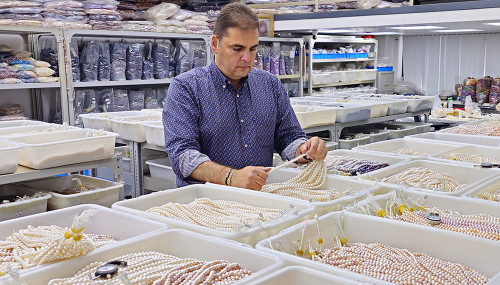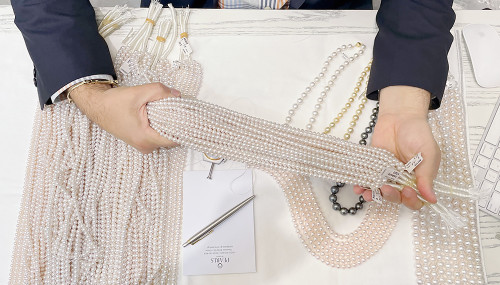
Pearls are considered timeless symbols of elegance, luxury and classic beauty.
However, as with many precious materials, pearls have been the subject of several myths and misunderstandings.
For the professional jeweler, proper knowledge is essential both to advise his clients correctly and to distinguish the quality and authenticity of a pearl.
So let's look at the most widespread myths and what you need to know.
Myth 1: "Pearls are formed from a grain of sand"
Reality: The probability of a grain of sand being the trigger for the formation of a pearl is almost zero.
Most natural pearls are created by microscopic parasites or organic particles that penetrate the interior of the shell.
In cultured pearls, the process begins with human intervention: the specialist implants a small nucleus inside the shell to induce the production of pearl.
Myth 2: "Cultivated pearls are fake"
Reality: Natural pearls that are created in nature are indeed very rare, expensive and not available for commercial use.
The pearls that are on the market today are all cultured.
Both natural and cultured are genuine pearls.
The difference lies in how the process begins.
Natural pearls: without human intervention (only for exhibition - advertising purposes by large jewelry houses).
Cultivated pearls: produced by placing a stimulus on oysters in a controlled natural environment.
That is why cultured pearls are more affordable and available for jewelry production.
A professional must know this information between natural and cultured pearls.
Understanding this process helps explain to your client why cultured pearls are 100% genuine and should not be confused with artificial or imitations.
Myth 3: "All pearls have the same quality"
Reality: The quality of a pearl depends on many factors.
- Luster
- Shape
- Size
- Surface
- Color
- Nacre: The thickness of the nacre.
- Matching: The similarity of the appearance of 2 or more pearls.
A flawless round pearl with a clean surface and intense luster is of high quality.
The jeweler must know how to judge and evaluate these characteristics correctly.
For this reason, our company offers its partners many different qualities of pearls and certified by G.I.A. so that they can choose the quality they desire.
Myth 4: "Pearls do not need special care"
Reality: Pearls are organic precious materials and sensitive to acids, sweat, perfumes and cosmetics.
Proper care and storage are essential to maintain their shine and durability.
A professional jeweler has the responsibility to inform customers on how to care for their pearls.
Each pearl necklace and bracelet Pearls By Kaleas that is strung with silk thread is accompanied by a special pearl cleaning and maintenance cloth.
The jeweler offers it to his customer for the care of the jewelry he purchased.
Myth 5: "All pearls are "white"
Reality: Pearls come in a variety of colors: white, pink, black, gray and gold depending on the type of shell and the conditions and place of cultivation.
The shades add uniqueness to the jewelry and create a greater variety of special designs.
There are many natural shades and the supplier is obliged to inform the professional about them.
There are shades that may have been artificially created by man and again the supplier is obliged to inform.
Our company, on the special warranty card, indicates the word Natural for the colors of the pearls.
We are also the only company in Greece and Cyprus that has certifications for the natural colors from G.I.A.
What does the jeweler who busts the myths gain?
Reliability: The customer understands that he is dealing with an expert.
Ease of sale: The right advice and information make the product more desirable.
Loyal customers: An informed customer who receives proper guidance returns and recommends the store.
Conclusion
Pearls are a precious treasure of nature but are accompanied by many myths that can confuse consumers.
The professional jeweler has a duty not only to clear up these misconceptions but also to provide correct and comprehensive information.
Thus, he creates trust and ensures the best shopping experience for his customer.